North China Oilfield is comprehensively advancing the construction of a "zero-carbon oilfield" acros
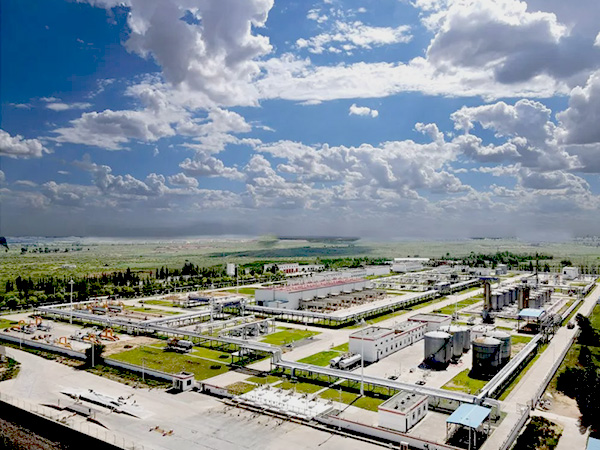
On May 21, reporters learned that the first wind turbine of the Renqiu 150,000-kilowatt wind power project in North China Oilfield has been successfully installed, demonstrating strong momentum in new energy development. Additionally, both oil and gas reserves and production at North China Oilfield have surpassed the same period last year. Traditional and emerging industries are working synergistically to continuously strengthen the energy supply foundation for mature eastern oilfields.
Focusing on building a new energy system, North China Oilfield treats reserve-production balance as the lifeline for sustainable oil and gas development, consistently transforming its development model by steadily increasing reserves and output while enhancing the value creation capacity of SEC (proven) reserves.
Strengthening energy supply and securing the "foundation" of energy security, North China Oilfield has incorporated stable reserve-to-production ratios into its annual key projects, centering on SEC reserves and deepening integrated collaboration to accelerate resource conversion efficiency. The oilfield is focusing on strategic areas such as deep layers in the Hetao-Linwa region, the western slope zone of Jizhong, rich oil basins, and the newly developed Qaidam Cold Lake area, striving for major breakthroughs and discoveries in new fields, formations, types, and domains to increase total SEC reserves. At the same time, through integrated geological-engineering technologies, it aims to boost daily well productivity, overcome technical bottlenecks restricting production capacity, systematically advance the "ballast stone" project and comprehensive management of mature oilfields, and improve the quality and efficiency of old field development.
As of April 30, the daily oil production of the Suning-Dawangzhuang "ballast stone" project increased by 3.5% compared to the end of last year. Exploration in the Shulu depression of the Jizhong depression and the Bayindulan depression of the Erlian Basin has made new progress, with average daily oil production per new well in old exploration zones achieving significant breakthroughs, promoting a virtuous cycle between reserves and production.
Accelerating green transformation to foster a "new pattern" in the energy system, the oilfield actively optimizes the energy structure used in oil and gas production, promoting clean alternatives such as "electricity replacing oil and heat." Meanwhile, leveraging existing resources in oil areas, it is scaling up photovoltaic and wind power projects to generate green value from underutilized spaces. The Ha34 block in Erlian Oilfield pioneered flexible intelligent control of oil and water wells combined with photovoltaic/thermal renewable energy applications, raising the share of green electricity to 14%.
North China Oilfield is comprehensively advancing the construction of a "zero-carbon oilfield," promoting upgraded demonstration projects integrating oil-gas and new energy power systems, and strategically deploying key initiatives such as geothermal cascade utilization and the Mengxi CCUS project. To date, the company has completed 50% of its annual target in expanding the geothermal market, and its CCUS project has injected over 100,000 tons of carbon this year.
Emphasizing technological innovation to forge new "drivers" for the industrial chain, the oilfield adheres to innovation-driven development, fostering an environment that encourages exploration and tolerates failure, supporting researchers in challenging conventional understanding and applying innovative theories to guide new practices in exploration and development. On one hand, targeting core technologies such as reservoir formation mechanisms in the Cold Lake block, efficient development of ultra-deep clastic reservoirs, and high-efficiency coalbed methane horizontal well stimulation, the company breaks down professional and organizational barriers, forming collaborative forces through innovation alliances and "challenge-based" projects. On the other hand, it improves the innovation ecosystem, establishing a full-chain system encompassing basic research, technological breakthroughs, and commercialization, accelerating the transformation of scientific achievements into practical productivity. Since the beginning of the year, independently developed technologies such as reservoir layer reconfiguration and intelligent allocation in high-temperature deep wells have been successfully applied, helping mature oilfields overcome resource succession challenges.